How To Reset Service Engine Light
A practical step-by-step guide to how to reset service engine light, including preparation, instructions, common issues, tips, and next steps.

How To Reset Service Engine Light
This guide explains how to reset the service engine light on your vehicle without using proprietary tools, while emphasizing the importance of diagnosing the underlying issue first. You'll learn how to retrieve diagnostic trouble codes, assess their severity, perform a safe reset using the vehicle's own controls, and verify that the light remains off. It also covers common issues, quick reference scenarios, and advanced tips for managing reset procedures effectively. Remember, resetting the light without addressing the root cause can lead to more serious damage, so always prioritize proper diagnosis and repair.
Fast Answer
- First, check if the service engine light is steady or flashing; if flashing, stop driving immediately and address the issue. If steady, proceed to read the diagnostic trouble codes using a code reader or your vehicle's built-in diagnostics.
- Once you've identified the issue and made necessary repairs, reset the light by disconnecting the battery for 15 minutes, or use your vehicle's onboard reset procedure (e.g., turning the ignition on and off or pressing a reset button).
Before You Start
- Ensure the vehicle is parked on a level surface and the engine is cool before attempting any reset to avoid injury or damage.
- Have a diagnostic code reader or access to your vehicle's onboard diagnostic system to retrieve the trouble codes; you can often borrow one from an auto parts store or use a smartphone app with a compatible adapter.
- Keep your vehicle's owner's manual handy to reference specific reset procedures and locate the diagnostic port and fuse box.
- Prepare a notepad to record the trouble codes and any unusual symptoms you've observed, which will help you understand the underlying problem.
Step-by-Step Instructions
Understand the service engine light
The service engine light, also known as the check engine light, is part of your vehicle's onboard diagnostics system. It illuminates when the computer detects a fault that affects emissions, performance, or safety. A steady light often indicates a minor issue like a loose gas cap, but a flashing light signals a serious condition such as an engine misfire that could damage the catalytic converter. Before resetting, you must determine whether the issue is critical. If the light flashes, pull over safely and turn off the engine. If it is steady, you can continue to drive cautiously to a safe location. Understanding what the light represents helps you decide appropriate action: never reset the light blindly, as it could hide a major problem that worsens over time. Take note of any changes in the vehicle's behavior, such as unusual noises, reduced power, or poor fuel economy, as these clues will guide your diagnostic efforts.
Read the diagnostic trouble codes
To properly address the service engine light, you need to retrieve the diagnostic trouble codes stored in your vehicle's computer. Locate the diagnostic link connector, often under the dashboard near the steering wheel. Connect a code reader or a compatible smartphone adapter, and follow the device's instructions to read the codes. Write down each code and its description. For example, a code with the letter P followed by four numbers indicates a powertrain issue. If you don't have a code reader, some vehicles allow you to retrieve codes by cycling the ignition a specific way, but this is less common. Many auto parts stores will read codes for free, but you'll need to go there. The codes are essential because they tell you exactly which system or component triggered the light. Without them, resetting is only a temporary fix, and the light will likely come back. Take the time to research what each code means, so you know if you can handle the repair yourself or need a mechanic.
Fix the underlying issue
Once you have the trouble codes, address the root cause before resetting. Common issues include a loose or faulty gas cap, bad spark plugs, a failing oxygen sensor, or a vacuum leak. Begin with simple checks: ensure the gas cap is tight and in good condition, as a loose cap is a frequent trigger. If the code indicates a specific component, inspect it visually and test it if possible. For example, a spark plug code may require replacing the spark plugs and ignition coils. If the repair is beyond your skill level, take your vehicle to a trusted mechanic. Resetting the light without fixing the problem is like turning off an alarm without stopping the fire; it won't solve anything. Moreover, a persistent issue may damage other components and cost more in the long run. After making a repair, double-check that all connections are secure and that the component is functioning correctly. Only when you are confident the issue is resolved should you proceed to the next step.
Choose a reset method
There are several ways to reset the service engine light, and the best method depends on your vehicle's make and model. The simplest universal method is to disconnect the negative battery cable for 15 minutes, then reconnect it. However, this also resets other vehicle settings like radio presets and clock, and it may not work on some newer vehicles. Another method is to use a code reader or diagnostic tool that has a 'clear codes' function; this is the most direct and often the recommended approach. Some vehicles have a built-in reset procedure, such as turning the ignition on and off three times or pressing a reset button on the dashboard. Consult your owner's manual to see if your vehicle has a specific procedure. Choosing the right method matters because an ineffective reset may leave the light on or cause issues with other systems. Take your time to understand the options and follow the correct steps for your vehicle.
Perform the battery disconnect reset
If you decide to reset by disconnecting the battery, start by turning off the engine and removing the key. Locate the negative battery terminal, which is typically marked with a minus sign and has a black cable. Use a wrench to loosen the nut on the terminal clamp, then gently twist and pull the cable off the terminal. Make sure the cable does not touch the metal of the battery or any other grounded part. Wait at least 15 minutes to allow the vehicle's computer to lose power completely. After the wait, reconnect the negative cable, tighten the nut securely, and ensure the clamp is snug. Turn on the ignition without starting the engine, and check if the service engine light is still on. If it remains lit, you may need to repeat the process with a longer wait or use another method. This reset method is widely available and requires no special tools, but it may affect other vehicle settings, as mentioned. Always double-check your vehicle's manual for any specific steps or precautions.
Clear codes with a diagnostic tool
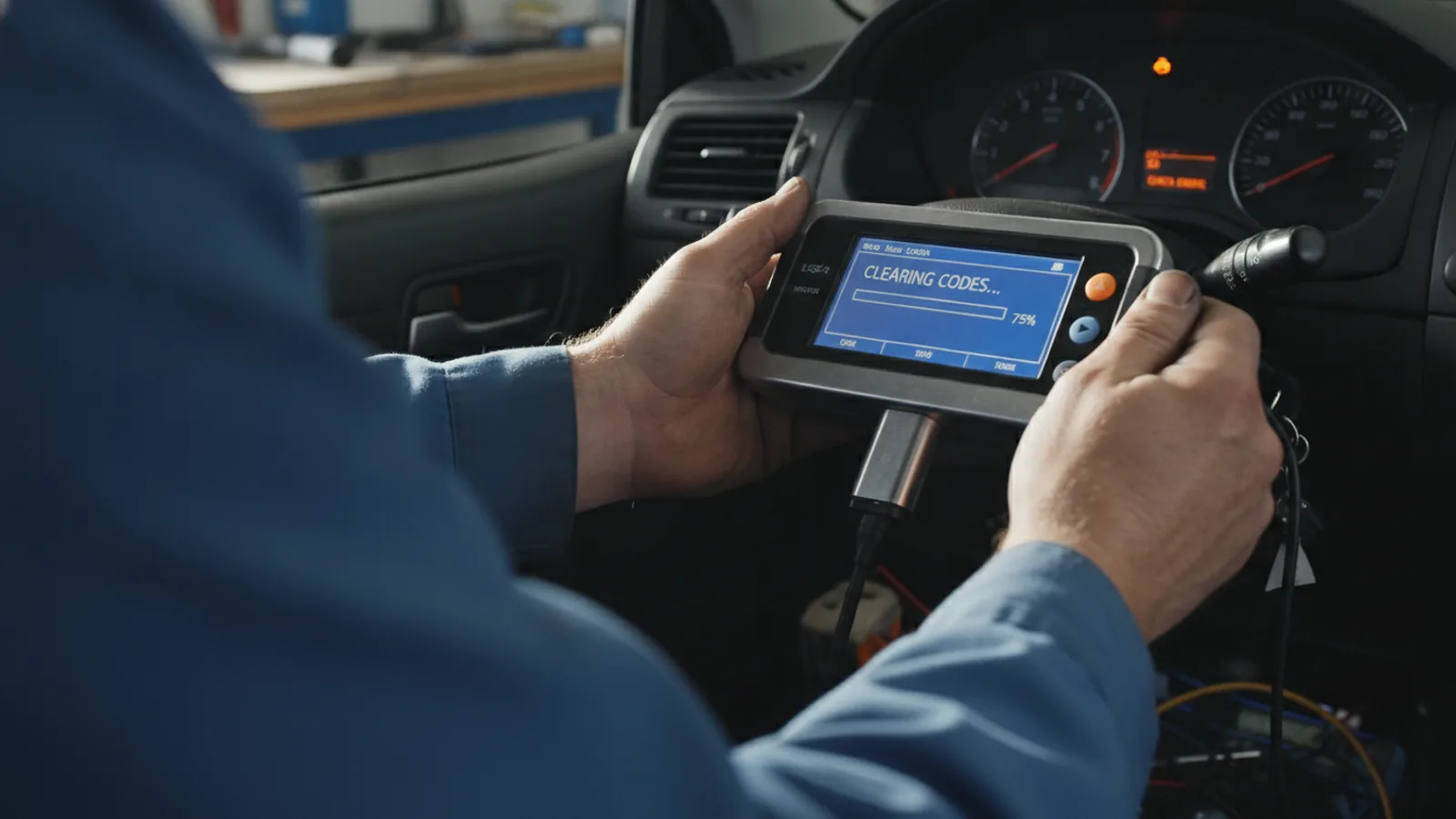
Using a diagnostic tool to clear the codes is the most precise method and is often recommended by professionals. After repairing the issue, plug the code reader into the diagnostic link connector and turn on the ignition (engine not running). Navigate the tool's menu to find the option to read or clear codes, and select 'Erase Codes' or 'Clear Codes.' Confirm that you want to proceed. The tool will send a signal to the vehicle's computer to clear the stored trouble codes and turn off the service engine light. Some tools also allow you to monitor readiness monitors, which indicate whether the vehicle's emission systems are ready for a mandatory emissions test. After clearing, turn off the ignition, unplug the tool, and start the engine to confirm the light is off. This method is helpful because it gives you a clean slate to verify if the repair was successful. If the light comes back on immediately, the problem is not fixed, and you'll need further diagnosis.
Verify the reset and monitor for recurrence
After performing a reset, start the engine and confirm the service engine light is off. If it stays off, continue to drive normally and observe the vehicle's performance. Occasionally, the light may come back on after a short time if the underlying issue is still present or if the computer hasn't completed its readiness tests. It's normal for the light to stay off after clearing codes if all systems are functioning properly. However, if the light reappears, read the codes again to see if the same problem is present or if a new one has developed. Monitoring for a few days is crucial because some issues only manifest under certain driving conditions, such as highway speeds or cold starts. Additionally, if you have an upcoming emissions test, ensure that your vehicle's readiness monitors are complete; some diagnostic tools can show this status. By verifying the reset and staying observant, you can catch any recurring problems early and avoid potential breakdowns.
Quick Reference
| Situation | Action | Why it helps |
|---|---|---|
| Service engine light is flashing while driving on a busy highway. | Safely pull over to the shoulder, turn off the engine, and call for roadside assistance or a tow truck. | A flashing light indicates a severe misfire that can damage the catalytic converter, so immediate attention is required. |
| You just filled up and the gas cap was not tightened. | Remove the gas cap, inspect its seal, and reinstall it until you hear a click; then drive for a few minutes to see if the light turns off. | A loose gas cap is a common cause of the light and is easily fixed; the system may then reset itself after several drive cycles. |
| The service engine light is steady and you have access to an OBD scanner. | Plug the scanner into the diagnostic port, read the codes, and note the descriptions; then research or repair the specific component indicated. | Diagnostic codes provide specific information about the problem, allowing for targeted repairs rather than guesswork. |
Common Issues
- Service engine light comes back on shortly after resetting the battery.: Recheck the diagnostic codes; the problem may not have been fully resolved. Perform a thorough inspection of the components related to the codes and consider using a diagnostic tool to clear codes instead of battery disconnect.
- No OBD port or code reader available.: Use a smartphone app with a Bluetooth OBD adapter (available at most auto parts stores), or drive to a mechanic who can read codes for free. Alternatively, check your owner's manual for a possible built-in diagnostic mode that displays codes on the dashboard.
- Reset works, but the light returns after a few days.: This suggests a intermittent or recurring issue. Look for loose connections, damaged wiring, or faulty sensors. Use a code reader to check for pending codes, and if necessary, consult a professional for advanced diagnosis.
Advanced Tips
- Learn how to interpret pending codes versus confirmed codes; pending codes indicate an issue that has occurred once and may not yet store a confirmed code.
- Familiarize yourself with your vehicle's drive cycle procedure, which is a specific sequence of driving conditions that allows the computer to run emission monitors and complete readiness.
- If you plan to do emissions testing, ensure that your vehicle's readiness monitors are all 'ready' before resetting; otherwise, the light may stay on after resetting until the monitors complete.
Final Checklist
- Write down all diagnostic trouble codes and their descriptions before resetting.
- Verify that the underlying issue has been fixed; if you are unsure, seek professional help.
- Choose a reset method that suits your vehicle, such as a code reader or battery disconnect.
- After resetting, monitor the light for at least a few days and ensure no new codes appear.
FAQ
Can I reset the service engine light without fixing the problem?
Yes, you can reset the light, but it is not recommended. Resetting without addressing the root cause will likely cause the light to come back on once the computer detects the issue again. More importantly, ignoring a real problem can lead to serious engine damage, reduced fuel economy, and expensive repairs. Always diagnose and fix the issue first.
How long should I disconnect the battery to reset the service engine light?
Usually, 15 minutes is sufficient to drain the computer's memory and reset the light. However, some vehicles may require up to 30 minutes or more. To be safe, consult your owner's manual. Also, note that disconnecting the battery will reset other settings like clock and radio presets, and it may not work on all vehicles.
Will the service engine light go off by itself after a while?
Sometimes, if the issue is minor and doesn't recur, the light may turn off automatically after several drive cycles without a reset. For example, a loose gas cap may cause the light to turn off after you tighten it and drive for a while. However, the code will usually be stored in memory, so it's best to read and clear it with a diagnostic tool to ensure a clean slate.