How To Add Engine Coolant To Car
A practical step-by-step guide to how to add engine coolant to car, including preparation, instructions, common issues, tips, and next steps.
How To Add Engine Coolant To Car
Adding engine coolant to your car is a routine maintenance task that keeps the engine from overheating and protects it from corrosion. This guide walks you through the process safely, from gathering supplies to checking the coolant level after topping off. You'll learn how to identify the correct reservoir, mix coolant properly, and avoid common mistakes. Always consult your owner's manual for specific guidelines, as coolant types and filling procedures can vary by vehicle. With careful preparation and attention to safety, you can maintain your cooling system effectively and extend the life of your engine.
Fast Answer
- Park the car on a level surface, let the engine cool completely, and locate the coolant reservoir under the hood.
- Check the coolant level against the 'min' and 'max' marks, then add a 50/50 mix of coolant and water to the reservoir, not the radiator, until it reaches the 'max' line. Replace the cap securely.
Before You Start
- Ensure the engine is cold, not just warm, to avoid burns from pressurized hot coolant.
- Gather the correct type of coolant recommended in your owner's manual, such as ethylene glycol or propylene glycol based.
- Have a clean funnel and a container of distilled water if you need to mix coolant with water.
- Keep a rag or paper towels handy to wipe up any spills, as coolant is slippery and toxic to pets.
Step-by-Step Instructions
Position the Car Safely
Park your car on a flat, level surface, and set the parking brake. Ensure the ignition is off and the key is removed. If you've driven recently, pop the hood but do not open any coolant caps yet—allow the engine to cool for at least two hours. This is crucial because the cooling system remains pressurized even after the engine is off. Opening a hot system can cause a sudden release of scalding steam and coolant, which could lead to serious injury. While you wait, you can safely locate the coolant reservoir, typically a translucent plastic tank near the radiator, clearly labeled with 'min' and 'max' markings.
Identify Coolant Components
Once the engine is cool, open the hood securely. Identify the radiator, which is the large metal or plastic unit at the front, and the coolant reservoir, a smaller translucent plastic tank connected to a hose that leads to the radiator. The reservoir will have markings labeled 'min' and 'max' or 'low' and 'full.' Also, locate the radiator cap—on older vehicles, you may add coolant directly to the radiator, but on most modern cars, you'll pour it into the reservoir. Your owner's manual will tell you which method applies to your vehicle. Understanding the difference is key; adding to the wrong part could cause overflow and an incorrect coolant level.
Check the Coolant Level
Look at the coolant level in the reservoir. It should be between the 'min' and 'max' lines when the engine is cold. If the level is below 'min,' you'll need to add coolant. If it's above 'max,' you may have too much coolant and should drain a small amount to avoid overflow when the engine heats up. Note the color of the coolant: it may be green, orange, pink, or blue, but this doesn't necessarily indicate the type, so always rely on the recommendation in your owner's manual. Checking the level at a cold engine gives the most accurate reading because the coolant hasn't expanded from heat yet.
Prepare the Coolant Mixture
If you're using concentrated coolant, you must mix it with water, usually at a 50:50 ratio, to achieve the correct freeze and boil protection. Many coolants come pre-diluted; check the label. Use distilled water instead of tap water to avoid mineral deposits that can clog the cooling system. Pour the coolant and water into a clean container, mixing thoroughly. Never add pure coolant because it will lower the boiling point of the mixture, potentially causing overheating in hot weather. Some climates may need different ratios, but 50:50 is safe for most conditions. Always follow the instructions on the coolant bottle.
Add the Coolant Carefully
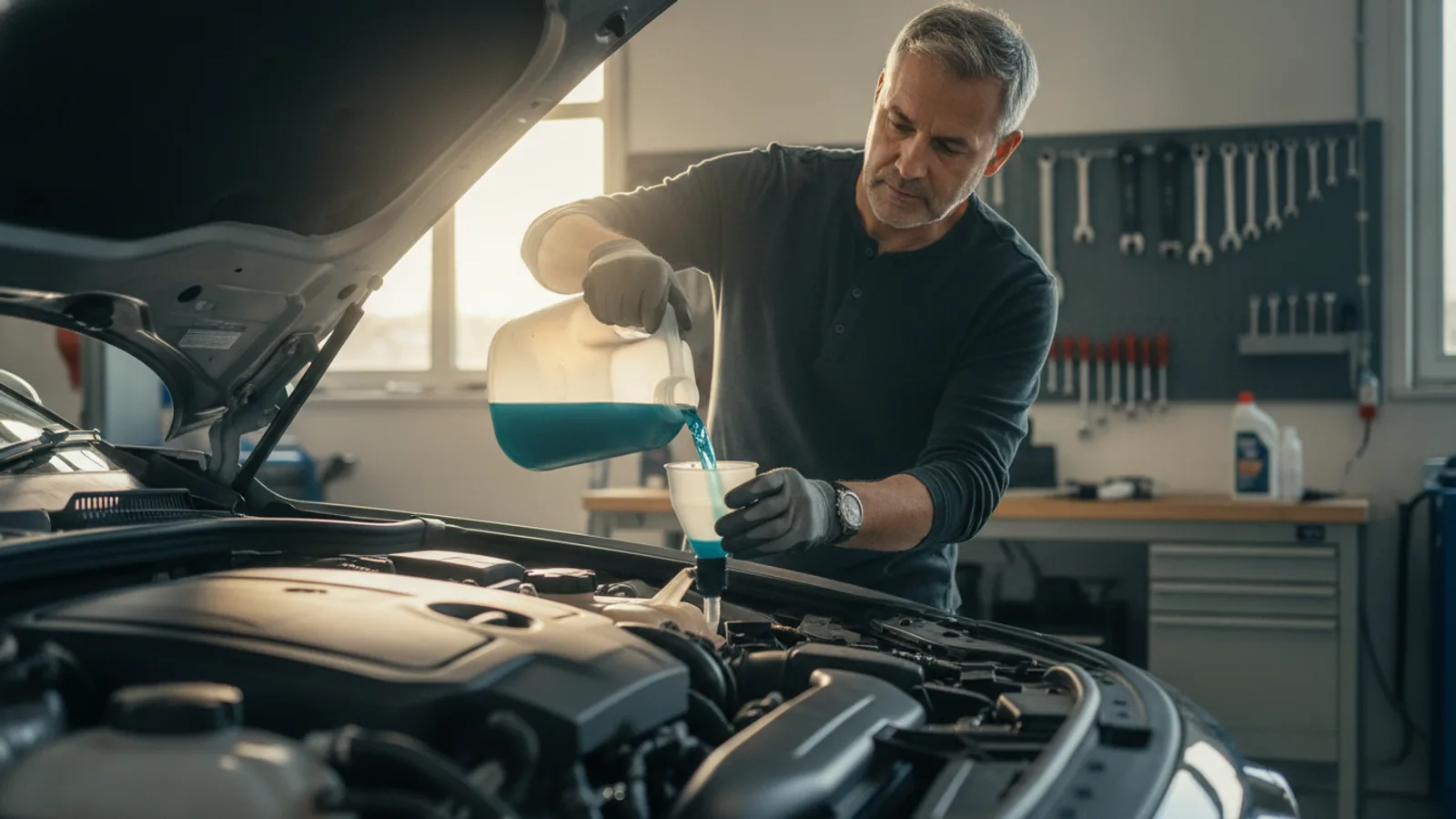
Using a clean funnel, slowly pour the prepared coolant into the reservoir until the level reaches the 'max' line. Do not overfill, as the excess will be expelled when the engine warms up. If your vehicle requires adding directly to the radiator, open the radiator cap carefully—again, ensure the engine is cold. Fill the radiator to the top, then replace the cap. Then, top off the reservoir as well. Pouring slowly prevents air pockets from forming in the system, which could lead to hot spots in the engine. If you spill any coolant, wipe it up immediately to prevent accidental ingestion by pets.
Verify the Level and Clean Up
After adding coolant, replace the reservoir cap securely. Double-check that the level is still between the 'min' and 'max' lines after any settling. Start the engine and let it run for a few minutes with the heater set to high to circulate the coolant. Then, turn off the engine and re-check the level after it cools down; you may need to add a little more if air pockets were purged. Finally, clean up any spilled coolant, close the hood, and store the remaining coolant and tools. This final verification ensures the system is properly filled and helps you catch any leaks early.
Quick Reference
| Situation | Action | Why it helps |
|---|---|---|
| Engine temperature gauge is near the top, and you suspect low coolant. | Pull over safely, turn off the engine, wait at least 30 minutes, then slowly open the hood and check the coolant level in the reservoir. Add a 50/50 coolant-water mix only if below 'min', then continue after the engine cools. | Driving with low coolant can cause catastrophic engine damage due to overheating. Checking after waiting prevents burns from hot coolant. |
| Coolant level is between 'min' and 'max' but you want to top it off anyway. | Do not add coolant if the level is within the normal range; simply replace the cap and monitor for any changes over the next few days. | Overfilling the reservoir can cause coolant to overflow when the engine heats up, leaving a mess and potentially damaging components due to excess pressure. |
| You're unsure which type of coolant to use for your vehicle. | Check your owner's manual for the recommended coolant specification, or look for a label near the radiator or reservoir. If you're still unsure, consult a mechanic. | Using the wrong coolant can degrade the cooling system's seals, cause corrosion, and reduce the efficiency of heat transfer, leading to potential long-term failures. |
Common Issues
- Coolant level drops rapidly after refilling.: Inspect for visible leaks under the car, check the radiator cap for damage, and look for white residue around hoses and connections. If no leak is found, have a professional pressure-test the cooling system to find internal leaks, such as a blown head gasket.
- Coolant appears discolored or has particles floating.: Flush the cooling system completely, following your owner's manual, and replace it with fresh, correctly mixed coolant. Contaminated coolant loses its protective properties and can clog narrow passages, leading to overheating.
- The engine overheats even though the coolant level is correct.: Inspect the radiator fan for operation when the engine reaches operating temperature. Check the thermostat by feeling the upper radiator hose after warming up—if it feels cold, the thermostat may be stuck closed. Replace the thermostat and test the system.
Advanced Tips
- Use a coolant hydrometer to measure the mixture's freezing point, ensuring your protection level matches your winter climate needs.
- If you mix coolant brands, ensure they use the same base chemistry (OAT, HOAT, or IAT); mix only in an emergency and plan a complete flush soon after.
- Bleed air from the cooling system by cracking the bleed screw, if equipped, or running the engine with the reservoir cap off until bubbles stop, then top off again.
Final Checklist
- Ensure the engine is completely cool before starting the coolant check and fill.
- Verify you have the correct type of coolant recommended for your vehicle.
- After adding coolant, run the engine and check for any leaks around hoses and the reservoir.
- Recheck the coolant level after the engine has cooled down from a short drive to confirm it's stable.
FAQ
How often should I check the coolant level?
It's wise to check the coolant level at least twice a year, such as before the summer and winter seasons. Also, check it before long trips or if you notice any signs of overheating. Regular checks help catch slow leaks early and prevent engine damage from low coolant.
Can I use water instead of coolant in an emergency?
In an emergency, plain water can temporarily keep the engine from overheating, but it lacks the anti-freeze and anti-corrosion properties of proper coolant. Use water only to get to a service station, then replace with the correct coolant mix. Do not continue to run the engine with plain water for any extended period.
Why is it important to use a 50/50 mixture of coolant and water?
A 50/50 mixture provides optimal protection: the antifreeze lowers the freezing point, while water improves heat transfer. Pure coolant has a higher freezing point than water, ironically, and reduces heat conductivity, which can lead to overheating in hot weather. The correct mixture ensures your engine operates within safe temperature ranges.