How Long Can You Drive On A Spare Tire
A practical step-by-step guide to how long can you drive on a spare tire, including preparation, instructions, common issues, tips, and next steps.

How Long Can You Drive On A Spare Tire
Driving on a spare tire is a temporary solution meant to get you to a repair shop, not a long-term fix. The distance you can safely travel depends on the type of spare, your vehicle's load, and road conditions. Most full-size spares can handle a similar distance as a regular tire, but temporary spares (often called donuts) are limited to around 50 to 70 miles, and you should never exceed 50 mph. This guide explains how to assess your situation, what to check before driving, and how to maximize safety while on a spare.
Fast Answer
- If you have a temporary spare (donut), you can typically drive up to 50-70 miles (80-112 km) at a maximum speed of 50 mph (80 km/h).
- A full-size spare tire, if identical to your regular tires and properly inflated, can be driven for a longer distance, but it's still wise to replace it with the repaired original tire as soon as possible.
Before You Start
- Check your vehicle's owner's manual for specific instructions about your spare tire, including speed and distance limits, as they can vary by make and model.
- Inspect the spare tire for proper inflation and any visible damage, such as cracks, bulges, or punctures, before installing it.
- Gather the necessary tools: a jack, lug wrench, and wheel wedges, which are usually stored in the trunk or under the cargo floor.
- Find a safe, level area to pull over and change the tire, ensuring you are away from traffic and on firm ground.
Step-by-Step Instructions
Assess the Type of Spare Tire You Have
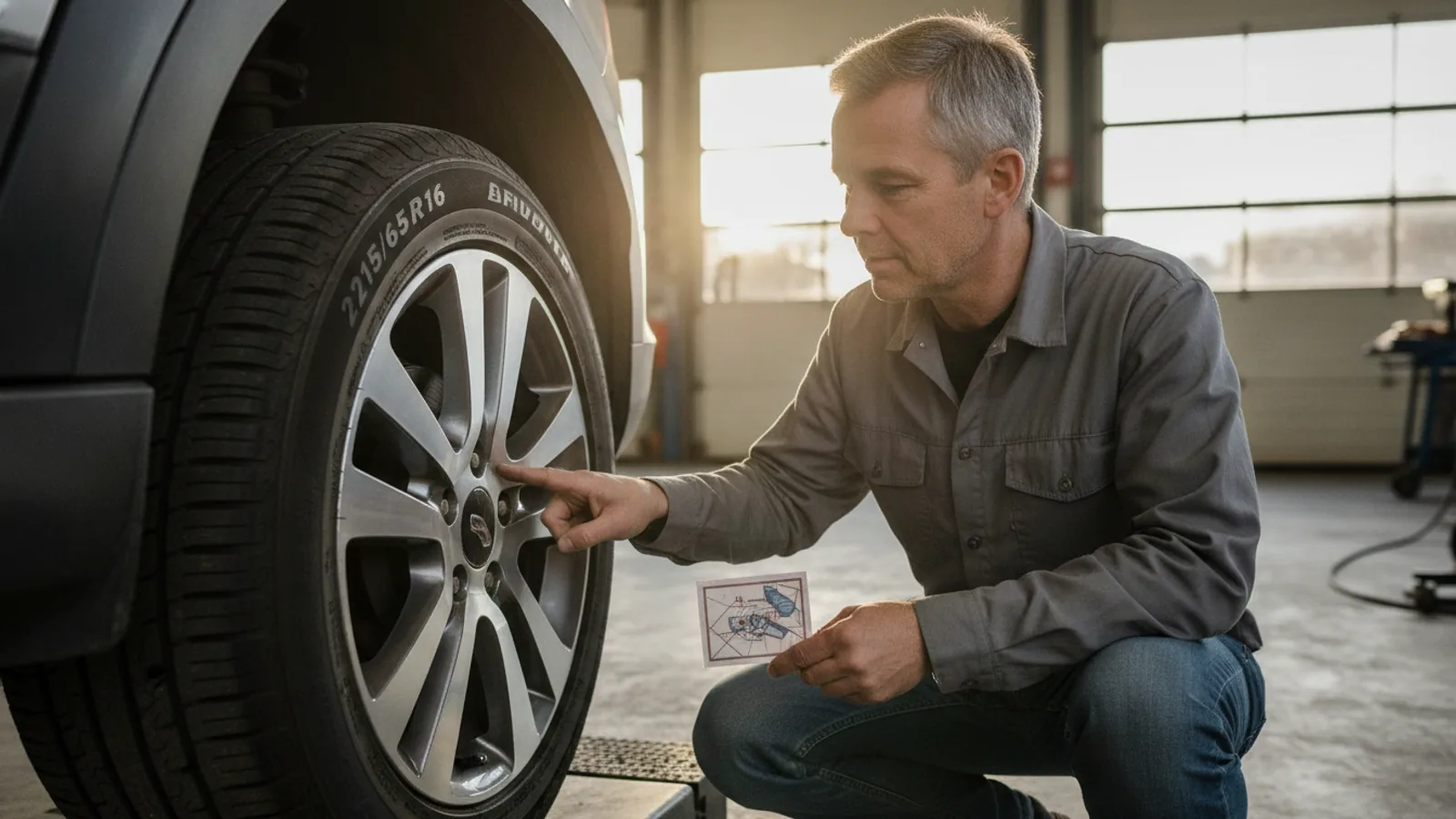
First, identify whether your spare is a full-size spare or a temporary donut. Look at the tire's sidewall for markings: if it says 'T' followed by numbers (e.g., T125/80D16), it's a temporary spare. A full-size spare will have the same size and load rating as your regular tires and often matches the original equipment. To find this, compare the spare's size (e.g., P215/65R15) to the driver's side door jamb sticker. Knowing your spare type is crucial because it dictates your speed and distance limits. A temporary spare is designed for limited use, while a full-size can last longer. Check the tire pressure of the spare; it should be inflated to the pressure listed in the owner's manual or on the spare itself. For temporary spares, the recommended pressure is often around 60 psi, which is higher than regular tires. Write down the type and pressure for future reference.
Safely Change the Flat Tire
To avoid injury and further damage, follow a proper tire-changing procedure. First, park on a firm, level surface and engage the parking brake. Place wheel wedges behind the opposite wheels to prevent rolling. Remove the hubcap or wheel cover if present, then loosen the lug nuts slightly (about half a turn) while the wheel is still on the ground. Jack up the vehicle using the designated jack points (consult your owner's manual) until the flat tire is off the ground. Remove the lug nuts fully and take off the flat tire. Mount the spare tire onto the wheel studs, and hand-tighten the lug nuts. Lower the vehicle just until the tire touches the ground, then tighten the nuts in a star pattern to the specified torque (usually 80-100 ft-lb, but check your manual). Finally, lower the vehicle completely and re-check the lug nut tightness.
Drive at Reduced Speed and Distance
Once the spare is on, your driving behavior must change. If using a temporary spare, do not exceed 50 mph (80 km/h) and limit your travel to 50-70 miles (80-112 km). This is because the spare has a smaller tread depth and is not designed for high-speed, long-distance driving. The reduced tire contact patch can affect handling and stability, especially on wet roads. If you have a full-size spare, you can drive at normal highway speeds, but only for a few hundred miles until you get the original tire repaired or replaced. During your trip, avoid sudden maneuvers, hard braking, and sharp turns. Also, be cautious when driving over potholes or rough terrain. Plan your route to the nearest tire repair shop, and if possible, take a route with lower speed limits to reduce stress on the spare.
Monitor the Spare's Condition
While driving, pay attention to how the vehicle feels and sounds. If you notice vibrations, wobbling, or unusual noises, pull over safely and inspect the spare. Check the tire pressure once more after a few miles, as it can increase with heat. Periodically, if you stop for fuel, visually inspect the spare for any signs of damage like cuts or bulges. Also, ensure that the lug nuts have not loosened by checking them after your first 10-20 miles of driving. If the spare feels hot to the touch, reduce speed or stop to let it cool. Remember, a temporary spare is not meant to be driven under heavy load, so if your car is loaded with luggage or passengers, consider reducing the load or taking a break. For a full-size spare, the condition is less critical, but still check for any issues.
Seek Timely Repair and Replacement
The ultimate goal is to replace the spare with a properly repaired or new tire. Driving on a spare for an extended period can lead to uneven wear, reduced fuel efficiency, and potential damage to your vehicle's drivetrain, especially if the spare has a different diameter than the other tires. As soon as you can, take your flat tire to a reputable tire shop for inspection. They will determine if it can be repaired (e.g., a puncture in the tread area) or if it needs replacement. If the original tire is beyond repair, purchase a new tire that matches the size, speed rating, and load index of the other three tires. While waiting, avoid driving more than necessary on the spare. If you have a full-size spare, you can use it as a regular tire, but it's still wise to get the original repaired to maintain even tread wear. Always store the repaired or new tire in the spare compartment, and consider replacing the spare with a new temporary unit if it has been used extensively.
Reset and Restore Your Vehicle
After replacing the spare with a full-size tire, you may need to reset your vehicle's tire pressure monitoring system (TPMS). This system detects when a tire's pressure is low, and if you have a spare with a different pressure, the TPMS may trigger a warning light. Refer to your owner's manual on how to reset the TPMS, which often involves pressing a button or driving at a specific speed for a few minutes. Also, remove any warning indicators and adjust the tire pressures of all four tires to the manufacturer's recommended levels, as listed on the driver's door jamb. Finally, store the spare tire properly in its compartment, ensuring it is secured. If you used a temporary spare, and it's okay to keep it for future emergencies, but remember to check its pressure monthly. Take a test drive to ensure the vehicle drives smoothly and that all dashboard lights are off.
Quick Reference
| Situation | Action | Why it helps |
|---|---|---|
| You have a temporary spare tire (donut) and need to drive to a nearby repair shop. | Install the spare, inflate to the recommended pressure (often 60 psi), and drive at or below 50 mph for no more than 50 miles. | Temporary spares are designed for short distances at moderate speeds to prevent overheating and failure, as they have less robust construction. |
| You have a full-size spare tire that matches your regular tires. | Install the spare, ensure it is inflated to the same pressure as your other tires (check door jamb), and drive normally but avoid long trips until you get the original repaired. | A full-size spare is identical to your regular tires, so it can handle normal speeds and distances, but using it long-term can cause drivetrain wear if the tread depths differ from the other tires. |
| You are on a multi-lane highway and need to drive to the next exit after installing a spare. | Stay in the right lane, use your hazard lights if needed, and maintain a speed of 45-50 mph (or slightly above the minimum speed, but never over 50 mph for a donut). | Driving slower than traffic but safely is required, as the spare's smaller size affects handling, and keeping to the right allows faster cars to pass, reducing the risk of collisions. |
Common Issues
- The spare tire is flat or underinflated.: Use a portable air compressor or a service station's air pump to inflate it to the pressure recommended on the sidewall or in the owner's manual. Never drive on a flat spare, as it can separate from the wheel. If the spare is damaged, consider calling roadside assistance.
- The lug nuts are overtightened or rusted.: Apply penetrating oil to the lug nuts and wait 15 minutes before attempting to loosen. Use the lug wrench with a pipe over the handle for extra leverage, but never jump on the wrench. If they still won't budge, call a professional to avoid damaging the wheel.
- The temporary spare is driven too fast for too long, causing it to overheat and possibly fail.: Stop in a safe area and let the tire cool down completely before continuing. Reduce your speed to below 50 mph. If the tire shows signs of damage, do not continue driving; instead, request roadside assistance or replace the spare with a full-size tire.
Advanced Tips
- If you have a doughnut spare, you can increase its lifespan by driving in a straight line and avoiding aggressive cornering, which reduces lateral force and heat buildup.
- For all-wheel-drive (AWD) vehicles, using a different-sized spare can damage the drivetrain; if you must use a spare, keep it on the rear axle and drive in a mode that disables AWD if available, or limit speed to 30 mph if the owner's manual warns of immediate harm.
- To avoid needing a spare, consider carrying a tire repair kit and an air compressor in your trunk, so you can plug a small puncture without ever using the spare. This kit is inexpensive and easy to use.
Final Checklist
- Check the spare tire's type (temporary or full-size) and its recommended pressure before installing.
- Drive at or below the speed limit for spares: 50 mph for donuts, and match regular speeds for full-size spares.
- Monitor the spare's condition and tire pressure after the first few miles of driving.
- Arrange to have the original tire repaired or replaced at a professional shop as soon as possible, and never exceed the spare's distance limit.
FAQ
Can I drive on a spare tire for a week?
It depends on the type. A full-size spare can be driven for a week or more if it matches your regular tires and is in good condition, but a temporary spare (donut) should not be used for more than 50-70 miles total. Even if you drive just a few miles per day, the tire may overheat or wear unevenly over several days. It's best to have the original tire repaired or replaced as soon as possible.
What happens if I drive over 50 mph on a spare tire?
Driving over 50 mph on a temporary spare can cause it to overheat, leading to tread separation or a blowout. The spare has a thinner tread and is not designed for high speeds. Additionally, the handling of your vehicle may be compromised, especially in curves or emergency maneuvers, increasing the risk of an accident. Always obey the speed limit for spares.
Should I put the spare on the front or rear axle?
If you have a temporary spare, it's generally better to place it on the rear axle, because the front wheels handle steering and braking, and a smaller spare can affect traction and handling. However, if your vehicle's drive axle is the front (as in most standard cars), putting a smaller spare on the front can cause differential damage. Always check your owner's manual; a common recommendation is to place the spare on the non-drive axle if possible, but for FWD, you may need to move a rear tire to the front and install the spare on the rear.